Instant download · 90-day money back

Grizzly Gus Buy Now
Checklists for cold nights

Plan cold nights in a tent or car

50 charts, checklists and scripts on heat, carbon monoxide, wet gear, food, water and getting help, with agency sources named.

  • Tonight's go or no-go chart
  • Carbon monoxide, hypothermia signs
  • Checklists for pack or glovebox
$27

229 pages, 50 tools and 32 printable sheets for $27. That is under a dollar a tool, paid once.

Buy Now · $27

🔒 Digital PDF + EPUB · nothing is mailed · one-time payment

  • 90-day money back
  • Secure Stripe checkout
  • Read on any device

Paid safely through Stripe. Your card statement will say LINK.COM* EVERYDAY DIG · one-time payment

90-day refund, keep the files

  • Refunds: 90-day refund, keep the files. Read the guarantee
  • Delivery: Instant download after checkout: PDF, EPUB and printables.
  • Checkout: secure, handled by Stripe.

From Grizzly Gus on YouTubeSources read October 2026

See inside

Real pages from the finished book

50 decision charts, checklists and scripts, in the order of the night · 32 printable sheets

229 pages, 50 tools, PDF + EPUB, plus the printable checklists. Tap a page to read it full size.

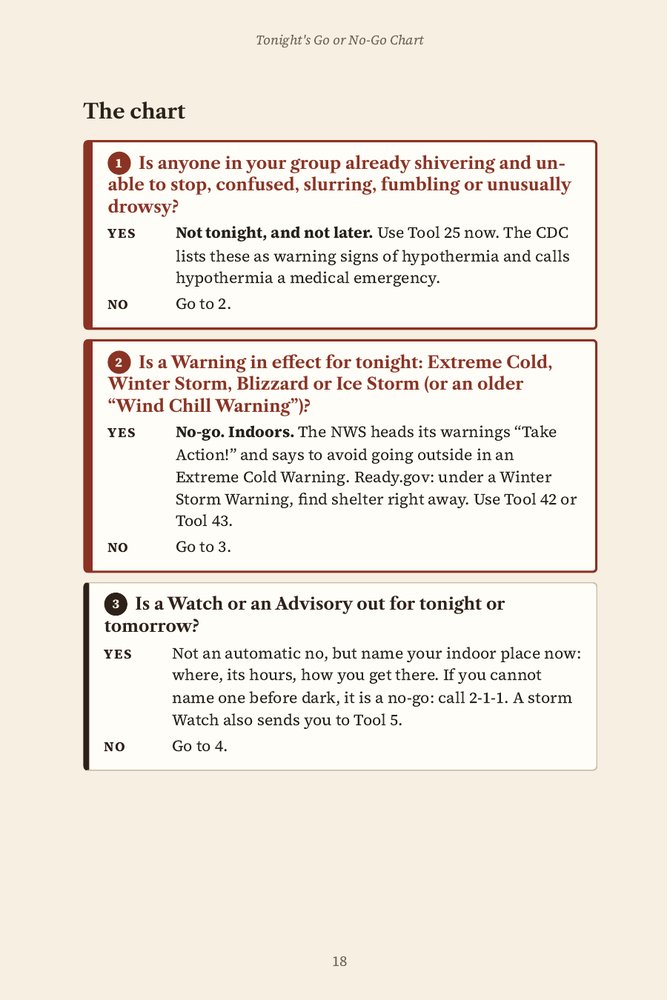
Page 18: Tonight's Go or No-Go Chart, the first three yes/no questions, from hypothermia warning signs to an NWS Warning or Watch for tonight.
Page 34: The Before-Dark Setup Checklist, the place and shelter checks, each tagged with its source (BLM, U.S. Forest Service) or marked as practice.
Page 187: Script: At the Shelter Door, word-for-word questions for the front desk about a bed, ID, rules, bags and pets.

Read the first pages

Who it is for: Campers, car campers and preppers planning winter nights, and anyone helping someone who is out in the cold: family, friends, volunteers.

The opening of the first chapter, “Reading Tonight's Forecast: Watch, Warning, Advisory”, as it reads in the book.

What's inside

What's inside

Seven parts that follow the night in order, from reading the afternoon forecast to the next morning, then food, water, help and word-for-word scripts: 50 numbered tools, measured at 229 finished pages. At the back: the numbers to call, key numbers at a glance, a glossary and every source with the date it was read. The 32 printable checklists come as their own PDF of 37 US Letter pages. Page numbers below are the real ones in the playbook PDF.

  • The afternoon: read the sky, make the call Reading tonight's forecast, what a watch, warning or advisory means in National Weather Service words, what wind chill does and does not mean, the go or no-go chart, and tent, car or an indoor bed tonight.13
  • Setting up before dark The before-dark checklist, whether a place is safe and whether you are allowed to stay, which heat sources may never come inside, the sleep system from the ground up, the car checklist, small shelters and their limits, the check-in plan and pets.33
  • The night and the morning after The bedtime checklist, waking up cold at 3 a.m., getting soaked in the night, the foot check, snow on the tent or car, stuck in a car in snow, then drying out, clothing layers, sleeping bag ratings and a kit at two budgets.66
  • When to leave, when to get help Hypothermia and frostbite warning signs as the CDC lists them, carbon monoxide symptoms, the leave-now triggers, 911, 2-1-1 or 988, calling 911 for someone too cold, and a cold-night first-aid kit. No dosages, and no treatment beyond the first-aid steps the CDC, NWS and Red Cross publish.108
  • Food and water without a stove or a fridge Is this food safe to eat, frozen cans and coolers, a three-day no-cook food bag, clean hands without running water, is this water safe to drink, boil or bleach by strength, and keeping water from freezing.148
  • Help and word-for-word scripts Which warm place is open now, and what to say when calling 2-1-1, at a shelter door, when security or police ask you to move, asking for written permission to stay, and asking an outreach worker, a friend, a health center or a food pantry.178
What you get

What you get

One payment, and all of it downloads at once. Beside each part is what something comparable costs from another seller.

  • The full playbook, as a PDF Every chart, checklist and script, searchable on a phone and printable at home, plus the same playbook as an EPUB. Not priced and not counted in the total.229 pages, 50 tools
  • Car nights, stuck in snow, and asking for help The car checklist, the CDC's stranded-in-snow rules, and word-for-word scripts for 2-1-1, a shelter door and an outreach worker. The Street Survival store sells The Street Survival Handbook, a PDF on living in a vehicle, for $29 on Gumroad.$29Parts II, III and VII
  • Forecasts, wind chill and clothing layers Watches and warnings, what wind chill means, layers by temperature band and matching a sleeping bag to tonight's low. Tim MacWelch's The Ultimate Winter Survival Handbook (Weldon Owen) is $8.99 as a Kindle ebook on Amazon.$8Parts I and IV
  • The printable checklists One-page sheets in large type, black ink on white, such as the bedtime checklist, the carbon monoxide card and the numbers to call. Print one for the pack, the car or the fridge door. Not priced and not counted in the total.32 sheets, 37 pages
Bought from those sellers, that is $37

$29 for The Street Survival Handbook on Gumroad and $8 for The Ultimate Winter Survival Handbook as a Kindle ebook on Amazon ($8.99). Real prices in US dollars, rounded down, checked 14 October 2026. The playbook itself, the EPUB, the printable checklists and the optional $10 Meal Cards at checkout are not counted.

You pay $27one-time payment

229 pages, 50 tools and 32 printable sheets for $27. That is under a dollar a tool, paid once.

Buy Now · $27

Digital PDF + EPUB · nothing is mailed

🔒 Instant download after checkout: PDF, EPUB and printables

90-day refund, keep the files

One payment. Nothing ships, nothing here expires, and there is no subscription.

How it works

How it works

  • Buy itOne payment of $27 through Stripe. No account to make, nothing ships, nothing recurs.

  • Download itYour download page opens as soon as the payment goes through: the playbook as a PDF and an EPUB, and the checklists as a printable PDF.

  • Use itRead the playbook on your phone, print the sheets you want for the pack, the car or the fridge door, and keep the files. No DRM and no expiry.

90-day
refund
policy

90-day guarantee

Ninety days, long enough to use it on real cold nights. If it isn't what you hoped, use the Refunds, privacy and terms page and every dollar comes back. No forms, no questions, and you keep the files either way.

Safety first

Cold-night safety facts, free to read

You do not need to buy anything to read this. It is the same guidance the playbook gives, from the agencies named.

Carbon monoxide. Never use a fuel-burning heater or lantern while sleeping in a tent, camper or vehicle (CPSC). Never burn charcoal or use a portable gas camp stove indoors (CDC). Carbon monoxide has no color and no smell, and people who are asleep can die from it before they have any symptoms (CDC). Symptoms include headache, dizziness, weakness, upset stomach, vomiting, chest pain and confusion (CDC). If anyone has them, get everyone into fresh air first, then call 911.

Cars. Do not sleep with the engine running. Even for someone stranded in a car in snow, the CDC's advice is to stay awake, run the motor about 10 minutes an hour with one window slightly open, and keep snow off the exhaust pipe to lower the risk of carbon monoxide poisoning.

Fire. Avoid candles where people may fall asleep (NFPA), and keep anything that can burn at least 3 feet from any heat source (U.S. Fire Administration).

Cold. Warning signs of hypothermia in adults: shivering, exhaustion or feeling very tired, confusion, fumbling hands, memory loss, slurred speech, drowsiness (CDC). It can happen above 40 °F when someone is wet from rain, sweat or cold water and becomes chilled (CDC). Constant shivering is a sign that it is time to go inside (CDC). A body temperature below 95 °F is an emergency: get medical attention immediately (CDC). Call 911. Wind chill is about bare skin: at 0 °F with a 15 mph wind it is -19 °F, and exposed skin can freeze in 30 minutes (National Weather Service). Do not drink alcohol to warm up (CDC, National Weather Service).

Who to call. 911 when a life is in danger now. 988, call or text, for emotional distress, a crisis, or alcohol or drug use concerns (988 Lifeline). 2-1-1, or 211.org, for local shelter, warming centers and food.

Sources: CDC winter-weather and carbon monoxide pages, CPSC, National Weather Service, U.S. Fire Administration, NFPA, 211.org and 988lifeline.org, all read 14 October 2026. Guidance can change. This is general safety information, not medical advice.

Questions

Questions

Will this keep me warm on any night?

No book can promise that, and this one does not. It gives you the official warning signs, the checks to do before dark and the decisions in order, and its go or no-go chart says plainly when the right move is to go somewhere warm instead. The safety facts in the box above are free to read.

Is this a printed book you mail to me?

No. Nothing ships. The playbook is a PDF and an EPUB, the checklists are a printable PDF, and you download all of them as soon as you pay. Print any sheet at home and keep it in your pack or glovebox.

Who is it for?

Campers, car campers and preppers planning winter nights, and anyone helping someone who is out in the cold: family, friends, volunteers. It is plain and practical, assumes nothing about why you are out there, and starts with the decision that matters most: whether tonight is a night to stay out at all.

Does it show how to build a shelter or heat a tent?

No. It has no build steps for tire-bale, straw-bale or pallet shelters; it explains what they are, their limits, and what permission and building codes involve. It never shows a way to heat a tent, car or shelter with anything that burns, because the CDC and CPSC say not to, and it does not cover staying anywhere you are not allowed. Every agency rule names the agency it comes from, such as the CDC, the National Weather Service, the CPSC, the EPA and the USDA, with the date it was read. It makes no promise that any gear or setup keeps anyone warm at a given temperature; it helps you decide, and it says when to go indoors.

What if it is not what I hoped?

Use the Refunds, privacy and terms page within 90 days and every dollar comes back. No forms and no questions, and you keep the files.

I lost my download link. What do I do?

Open the "Lost your link?" form, type the email you paid with, and we send your download link again. It can take a minute and may land in Promotions or Spam.

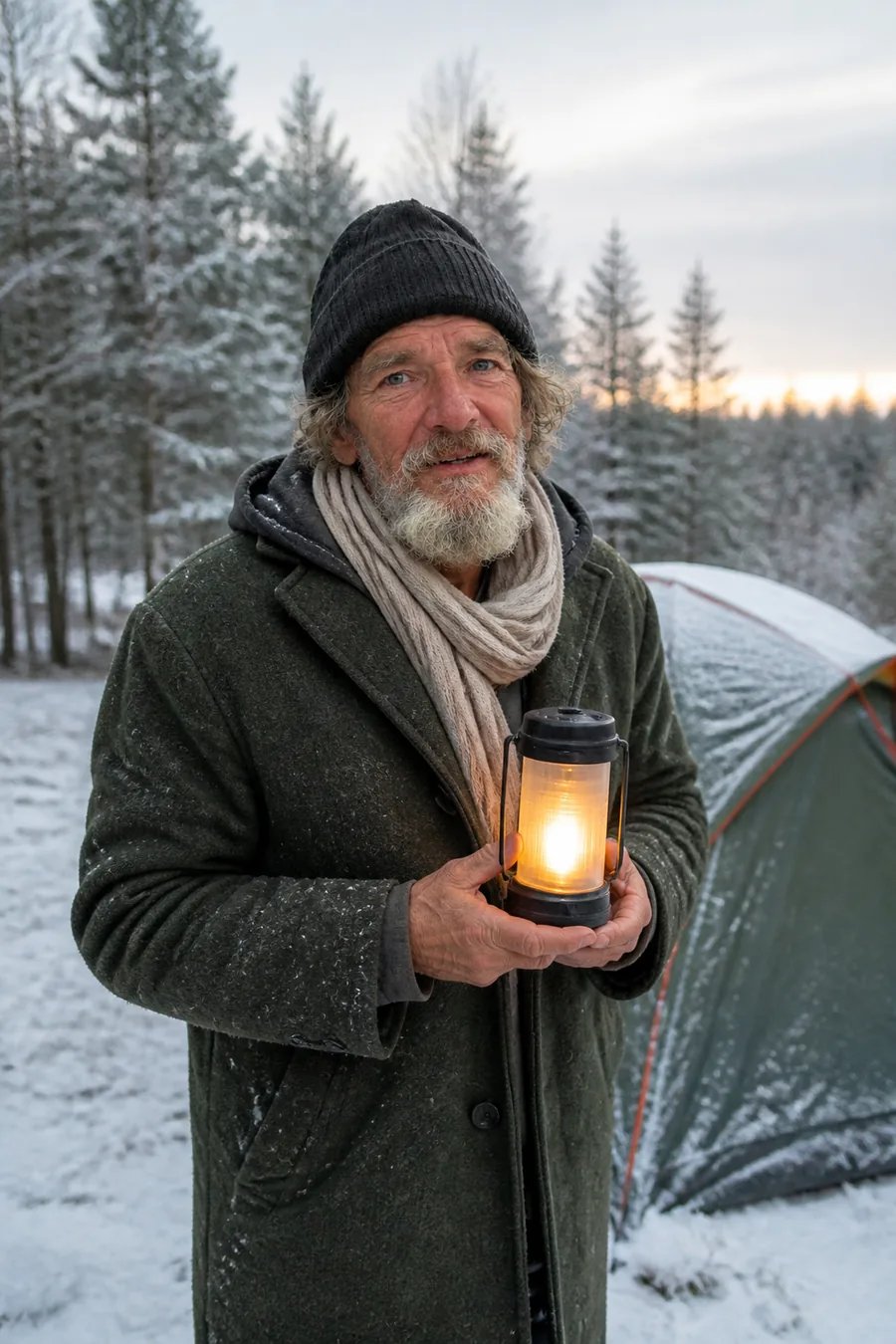
Grizzly Gus
Who wrote it

Who wrote it

What stands behind this playbook is its sourcing. Every safety rule in it, on hypothermia, frostbite, carbon monoxide, heaters, food and water, is taken from the agency that published it, such as the CDC, the National Weather Service, the CPSC, the EPA and the USDA, with the date it was read, and anything that is ordinary camping practice rather than agency guidance is labelled as practice. Where an agency rule could not be confirmed from the agency's own page, it was left out. It covers the subjects of the YouTube channel below, written as plain decision charts, checklists and scripts.

Grizzly Gus

Grizzly Gus on YouTube

The Cold Night Survival Playbook · 229-page playbook + 32 printables · $27, one-time payment

Buy Now · $27

Digital PDF + EPUB · nothing is mailed

Paid safely through Stripe. Your card statement will say LINK.COM* EVERYDAY DIG

🔒 Instant download after checkout: PDF, EPUB and printables

90-day refund, keep the files

Page 18: Tonight's Go or No-Go Chart, the first three yes/no questions, from hypothermia warning signs to an NWS Warning or Watch for tonight. Page 34: The Before-Dark Setup Checklist, the place and shelter checks, each tagged with its source (BLM, U.S. Forest Service) or marked as practice. Page 187: Script: At the Shelter Door, word-for-word questions for the front desk about a bed, ID, rules, bags and pets.

From The Cold Night Survival Playbook

Reading Tonight's Forecast: Watch, Warning, Advisory

Read three things for tonight first: the low, the wind and whether anything will fall. Then read the alert banner, if there is one, by its last word: Warning means take action, Watch means be prepared, Advisory means be aware.

When to use it

The NWS page “Prepare for Cold Weather” (read 2026-10-14) says to make checking the forecast part of your regular routine. At weather.gov, enter a town or ZIP code. Any alert shows in a banner at the top; read the Detailed Forecast paragraph for “Tonight” (PRACTICE).

The alert words

From NWS, “Winter Weather Warnings, Watches and Advisories” and “Understanding Cold Weather Alerts” (both read 2026-10-14).

In October 2024 the NWS renamed its cold alerts: Wind Chill Watch became Extreme Cold Watch, Wind Chill Warning became Extreme Cold Warning, and Wind Chill Advisory became Cold Weather Advisory (NWS news item “National Weather Service revises watch, warning and advisory products for cold”, read 2026-10-14). Treat an old name as its new one.

The worked example

Illustrative sample in NWS style. Banner: Winter Weather Advisory. “Tonight: Snow likely after 9pm. Cloudy, with a low around 17. Wind chill values as low as 2. North wind 10 to 15 mph, with gusts as high as 25 mph. Chance of precipitation is 70%. New snow accumulation of 1 to 3 inches possible.”

The chapter goes on from here in the book.

🔒 Digital PDF + EPUB · nothing is mailed

The Cold Night Survival Playbook · 229-page playbook + 32 printables · $27, one-time paymentBuy Now · $27

Digital PDF + EPUB · nothing is mailed

10% off, if it helps

Leave your email and we will show you a code for 10% off The Cold Night Survival Playbook, and send it to you too. It works for 7 days.

We'll email you from Grizzly Gus. Unsubscribe anytime.

From MARIANO MEDIA INC. Privacy